

The Somatics Lab
healing in community in unsettled times
Monday nights, October 5-26
@ People’s Solidarity Hub, Durham
“The times are urgent — let us slow down.”
—Bayo Akomolafe
We are living in a moment of intersecting crises. The future seems less clear, often less hopeful, than ever. And somehow we still have to figure out how to collaborate, parent, love, grieve, rest, fight, forgive, and grow.
As the world around us unravels, who do we choose to be?
Despite our beautiful visions and professed values, under pressure, our bodies take over and run the “software” we downloaded as children — individualism and perfectionism, seeking control and comfort, shaming ourselves and others. We slide into feeling powerless, alone, numbed out, or hypervigilant.
The Somatics Lab offers a space to practice being the person we want to become. In the spirit of a dojo, we practice letting go of our automatic behaviors and replacing them with new embodied choices. Through practice we build our capacities for being mature, loving, responsible humans.
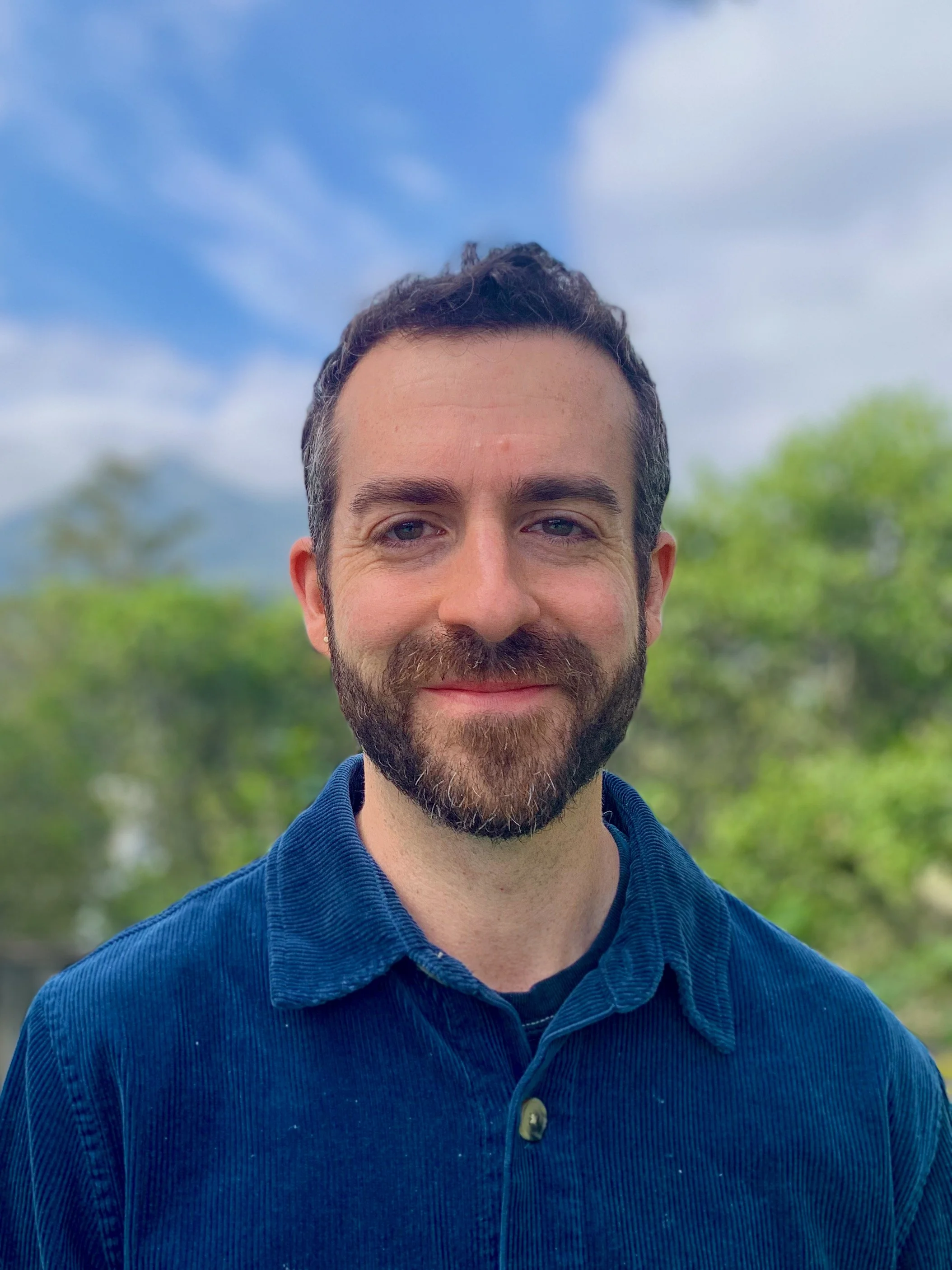
facilitated by J.D. Nasaw
What is somatics?
“Somatics” — from the ancient Greek word soma meaning “living body” — came to popularity in the 1970’s to describe a movement of holistic approaches to healing. The West was (re)discovering how healing happened in Eastern and Indigenous traditions, before the European “mind-body” split.
My lineage of somatics began in 1970 at Lomi School in California, at the very beginning of the somatic movement. Many teachers evolved this body of work over the next 55+ years, largely at Strozzi Institute and generative somatics. Strozzi/generative somatics incorporates a diverse lineage, including body-oriented psychotherapy, meditation, aikido, linguistics, breathwork, indigenous healing, and other modalities.
Many other somatic methodologies arose concurrently and share common influences, such as Somatic Experiencing, Internal Family Systems (IFS), Hakomi, Sensorimotor Psychotherapy, Feldenkreis, Rolfing, Bioenergetics, Craniosacral Therapy, Focusing, and Gestalt Therapy.
“Practice is transformative because you begin to embody new ways of being. Through repetition what was a new practice becomes natural, easy, a new habit. You are in fact beginning to become somebody new. You will begin to see more clearly and quickly the choice that opens up in the moment about how you want to be. We are what we practice. Are we practicing what is most aligned with our vision for the world?”
—Staci Haines

2 Sessions Each Monday — come to one or join for both!
6:30-7:30pm (1 hr)
Foundations
Core Somatic Practices
The Foundations Lab is a welcoming space for learning the core practices of somatics across a range of skill levels. This is a great place to start if you are brand new to somatics. It’s also a vibrant training ground for more experienced practitioners that want to deepen and refine their embodiment.
We begin each session with “opening practices” — a warm-up of simple exercises that reveal greater complexity as we practice them repeatedly over time.
We spend the bulk of the session digging into a core somatic practice that builds a foundational embodied competency. Embodied competencies include: being aware of what is happening in your body, experiencing a full range of emotions, negotiating to meet your needs, setting healthy boundaries, trusting your intuition, staying centered when you get triggered, and allowing more pleasure in your body.
7:45-9:00pm (75 min)
Explorations
Somatics for Embracing Conflict
The Explorations Lab focuses on specific applications of somatics, particularly for navigating relationships. Prior experience with somatics will be helpful, but beginners are also welcome.
Each monthly series has a theme, and introduces new practices in each session. “Embracing Conflict” is the theme for the October 2026 series.
Many of my clients begin somatic coaching because they want to learn how to deal with conflict. Growing up, most of us we’re shown how to embrace conflict as generative and inherent to intimacy. We learned to defend ourselves, to make sure we never “lose”, to rush towards resolution too quickly, or to give up on our needs. Some of us start fights because it’s the only way we feel connected, and others experience the smallest whisper of tension as intolerable.
This lab offers new embodied practices for working skillfully with conflict. We learn to recognize when we get triggered and carried away in fight, flight, freeze, and appease. We practice staying present, managing safety, connected to our dignity, and open to reconciliation. We learn to access our creativity to find satisfying outcomes and integrate whatever feedback the conflict has surfaced. Through these practices we can finally stop avoiding difficult conversations, and stop getting stuck in the same fights, with the people closest to us. We start to embrace conflict in a way that minimizes violence and builds the capacity for healthy interdependence.
What this is not:
Lots of talking about the history, neuroscience, and “why” behind somatics (I’m happy to send you that).
A “feel better” experience aimed at getting more muscles, more status, more happiness.
A space for catharsis without exploring new possibilities and ongoing practices.
Organizing ourselves to take collective actions, force change, or fix broken systems
A guru/expert offering a falsely positive narrative and a linear path to personal fulfillment
A replacement for mental health crisis support or acute trauma therapy
The Details
Mondays October 5, 12, 19 & 26
6:30-7:30pm FOUNDATIONS: Core Somatic Practices
7:45-9:00pm EXPLORATIONS: Somatics for Embracing Conflict
*Participants are encouraged but not required to attend all sessions. Drop-ins are welcome for any single session/date.
**Monday October 5 is free for anyone who tries the lab and decides not to continue.
Upcoming Date(s)
People’s Solidarity Hub, Durham
1809 Chapel Hill Rd, Durham, NC 27707
**Parking is available behind the building or on the street
Location
$15 - suggested donation per session
$25 - make it possible for others to pay less
$10 - paying less makes it possible for you to attend
Sliding Scale Donation
Registration
Register for One Session:
Register for the Full Series:
Questions about The Somatics Lab?